
Reading guide
Age-Gap Romance: Finding the Dynamic You Want
Life stage, experience, social expectations, and the relationship beyond the number.
Age-gap romance features adult romantic leads whose age difference matters to the relationship. The gap might create different expectations about work, family, money, or the future. It can also affect how other people respond to the couple.
A number on its own does not describe the dynamic. Two independent adults at different life stages are not the same setup as a boss and employee, an ex’s parent, or a relationship entangled with financial power. Choose the surrounding tropes as carefully as the age-gap label.
Start with the source of tension
Ask what makes the age difference meaningful in the premise. Is one person newly understanding their sexuality? Do they want different futures? Is the problem social judgment, a family connection, or the rules they impose on themselves?
These questions help distinguish an age-gap story from a general promise of an older love interest. Silver Fox, Older Heroines, Late Bloomer, and Forbidden Romance can identify different aspects of the appeal, but none should be assumed just because Age Gap is present.
Treat power and age as separate filters
Age can overlap with authority, wealth, or professional control, but it does not automatically imply any of them. If you enjoy workplace tension, add the relevant tag deliberately. If you want to avoid a particular power dynamic, use the avoid filter where the publisher has supplied a matching tag and read the content notes.
The examples here are adult romances. Their descriptions are useful because they explain the relationship’s practical complications, rather than relying on the age difference to do all the work.
Book examples to explore

Until June
Blair Lennox’s Until June pairs fifty-five-year-old Odette with thirty-two-year-old Casey. They begin with a temporary arrangement and an end date. The publisher’s premise puts public acknowledgment and future expectations at the center, making this an example of age gap alongside late-blooming discovery and rules that become emotionally costly.
Publisher description & reading options ↗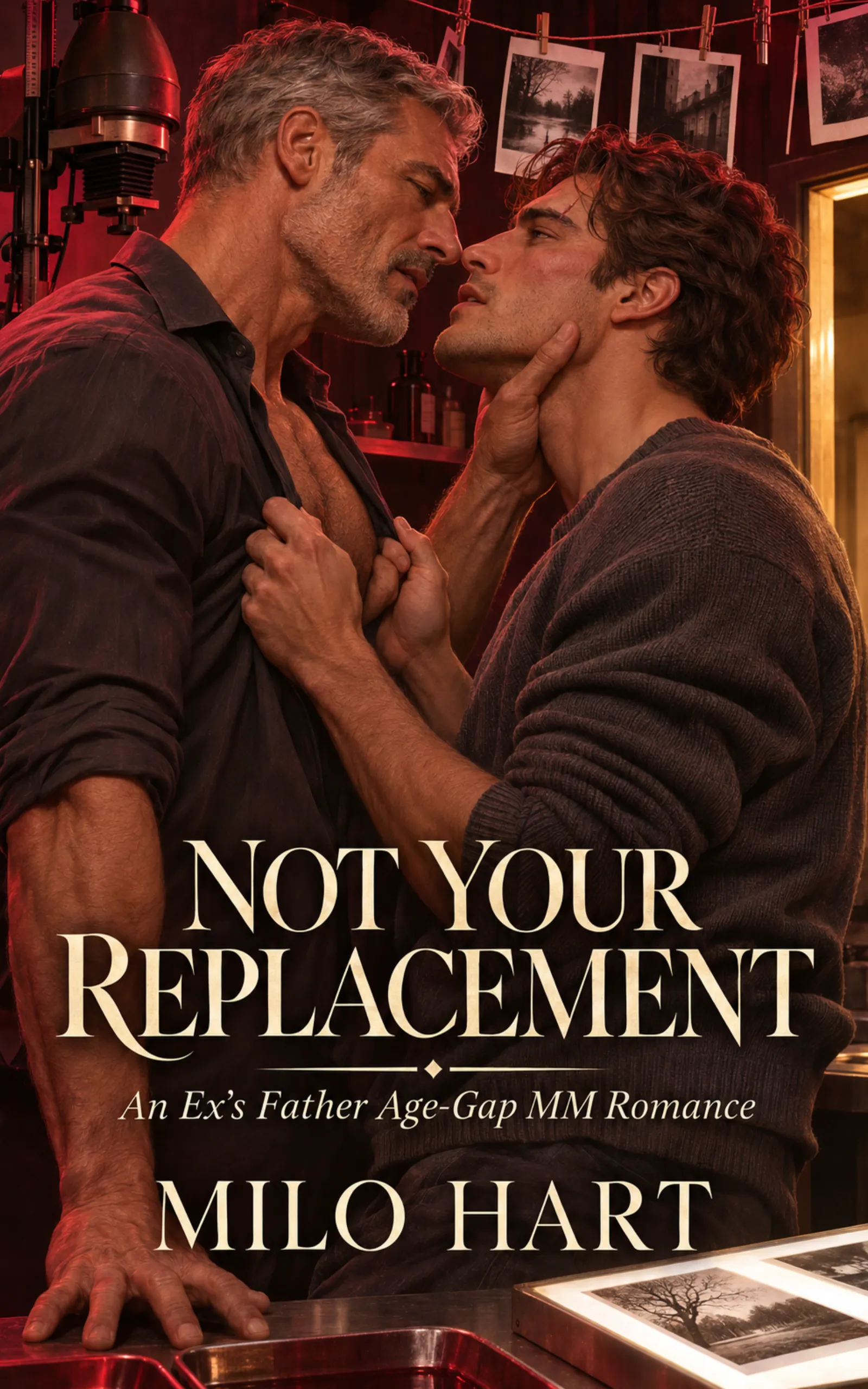
Not Your Replacement
Milo Hart’s Not Your Replacement pairs museum registrar Daniel with photographer Graham, who turns out to be Daniel’s ex-boyfriend’s father. The age gap is only one layer: family history, a secret relationship, and working together create separate pressures. Choose it for that specific forbidden connection, not simply for an older lead.
Publisher description & reading options ↗
Double Booked
Riley Kendra’s Double Booked gives two capable women conflicting contracts for the same lakeside terrace. Its publisher lists a ten-year age gap, but the immediate friction is professional rivalry and forced proximity. This is a useful alternative when you want an age-gap relationship inside an event-management comedy.
Publisher description & reading options ↗Build a search around your mood
Choose your pairing and Age Gap first. Add a single relationship or setting tag that matters most, then adjust heat separately. Avoid adding every nearby label: requiring Age Gap, Forbidden Romance, Workplace Romance, and a specific family connection at once may hide books that otherwise fit your mood.
Browse age-gap romances →Common questions
Is there a universal minimum age difference?
No single number is used consistently across romance publishing. TropeScout follows the publisher’s tag; when a description supplies ages or a gap, use that information to decide whether it fits your preference.
Does age gap always mean forbidden romance?
No. The relationship may be accepted by the people around it. Forbidden Romance describes an additional barrier and should be treated as a separate choice.
These examples come from Fractal Enigma’s catalog and are based on publisher descriptions and tags, not full-book reviews. TropeScout is a Fractal Enigma project. Read the sample and content notes to decide whether a book is right for you.