
Sapphic reading guide
Sapphic Age-Gap Romance: Older Heroines, Late Bloomers, and Life Beyond the Gap
Separate age, identity, experience, and social stakes to find the kind of sapphic relationship you want to read.
Sapphic age-gap romance can center an established queer woman, a late bloomer, a divorced heroine, or two women whose ages matter far less than the lives they have built. The category offers room for older women to desire, change their minds, and begin again. It also contains very different kinds of tension, from a temporary arrangement to a relationship complicated by work or family.
To choose well, separate the age difference from the other elements in the premise. Sexual experience, professional authority, money, and certainty about identity do not necessarily belong to the same person. This guide uses adult relationships described by their publisher to show how those elements can combine, and how to search without making one label stand in for the entire story.
Choose your starting point
| If you want | Look for this setup | Book to explore |
|---|---|---|
| A decision with a deadline | A temporary arrangement | Until June |
| Shared work and family ties | Contractor and designer | She’s Not My Daughter’s Friend Anymore |
| A workplace secret | An employer’s ex-wife | The Woman My Boss Married |
An older heroine can be the person discovering something new
Age and self-knowledge do not advance on a single timetable. A heroine may be accomplished at work and inexperienced in a particular kind of relationship. She may understand her attraction while still deciding how to name it, or know her identity while struggling to make space for romance after divorce.
Late Bloomer, Sapphic Awakening, and First Time can therefore overlap with Older Heroines without meaning the same thing. One concerns the timing of a discovery, another the nature of the attraction described by the publisher, and another a particular experience. None automatically tells you what identity label a character will choose.
If recognition and self-definition are central to what you want, read for those themes explicitly. If you prefer two women who are already comfortable with their identities, the Age Gap filter alone is a broader place to begin.
Ask what makes the relationship feel unequal—or equal
A larger age difference can attract attention inside the story, but other circumstances often create the practical pressure. One woman may have more money, a wider professional network, an employer’s influence, or a home the other cannot easily leave. Those details deserve to be read separately from age.
For readers who enjoy negotiated arrangements, the appeal may lie in how the characters define and revise their terms. For readers who prefer professional peers, a shared project can establish competence on both sides. Neither setup tells you everything about the emotional balance.
Look for agency in the premise: both women should have desires, decisions, and lives that matter. If you have a specific boundary around workplace authority or financial dependence, inspect the description and content notes rather than assuming that a romantic tag settles the issue.
Family connections create a different kind of forbidden story
A daughter’s friend, an ex’s relative, or a partner connected to an existing social circle can make disclosure part of the plot. The age gap may be visible to everyone, while the more important question is how the women’s choices affect relationships they want to keep.
These premises can appeal to readers who enjoy secrecy and the cost of becoming public. They can be less appealing if you want a romance with little family interference. The distinction is useful when two books share Age Gap but one places family consequences at the center and the other does not.
Read the ages and the timing supplied by the publisher. A family connection should not be treated as evidence that a romance began before adulthood. In the examples below, the romantic relationships are between adult women; any additional history should be checked in the source rather than inferred from a title.
Work can provide both chemistry and a believable obstacle
A workplace-related romance can begin with admiration for how another woman thinks, solves a problem, or treats someone under pressure. It can also create limits on privacy, decision-making, and public behavior. A shared job is not simply a backdrop when the characters’ choices affect a project or an income.
Be precise about who employs whom. A heroine dating her boss’s ex-wife is not dating her boss, even though the boss may still have power over her job. A contractor and a designer may have competing responsibilities without one being the other’s direct supervisor.
If professional competence is part of your reading pleasure, combine Age Gap with Workplace Romance or a more specific work-related tag. If you want to avoid employment pressure, use that information to steer toward a different premise rather than treating every older heroine as an authority figure.
Choose whether you want a deadline, a home, or a public decision
An arrangement with an end date creates anticipation around the moment the women must decide whether to ask for more. A renovation creates an extended shared purpose. A secret relationship creates pressure around being seen. These are different plot structures even when the age gap is similar.
Think about the kind of scene you enjoy imagining. Is it the conversation that changes a contract? The ordinary evening when a shared routine becomes intimate? The moment someone acknowledges a partner in front of other people? Your answer can guide the next filter more effectively than adding every trope you usually like.
Descriptions are especially useful here because they supply concrete objects, settings, and deadlines. Tags can narrow a field; a premise tells you what the characters will actually have to do.
Do not use age as a shortcut for tone or heat
An older heroine does not make a book automatically gentle, serious, restrained, or explicit. A late-bloomer premise can be funny, emotionally difficult, highly sensual, or several of those at once. The relationship’s age difference does not establish its tone.
The examples in this guide are high-heat publisher listings. Read their content notes for the kinds of conflict and intimacy described, and use a sample to judge the narrative voice. If you want lower heat, apply the available heat filter instead of expecting an age or life-stage tag to make that decision.
For search, begin with Sapphic · FF and Age Gap. Then add the most important extra element—Older Heroines, Late Bloomer, Workplace Romance, or Forbidden Romance—using All if every selected label is essential.
Book examples to explore

Until June
Until June by Blair Lennox centers a relationship arrangement with an end date. The publisher’s current description identifies Odette as fifty-five and Casey as thirty-two, and the listing includes Age Gap, Late Bloomer, Sapphic Awakening, and Contract/Arrangement.
Explore this example if you want the tension between terms that once seemed manageable and feelings that no longer fit them. The deadline gives the relationship a different structure from a story driven mainly by an employer or a family reveal.
Publisher description & reading options ↗
She’s Not My Daughter’s Friend Anymore
She’s Not My Daughter’s Friend Anymore by Blair Lennox pairs restoration contractor Darla Keene, forty-seven, with designer Maddie Ross, thirty, on the Rutherford House project. Maddie is also Darla’s adult daughter’s best friend. The publisher describes a late-life first-woman awakening and a seventeen-year gap.
This premise combines shared professional work, a family connection, and a small town’s attention. It is a useful starting point if you want those pressures to intersect rather than reading the age difference in isolation.
Publisher description & reading options ↗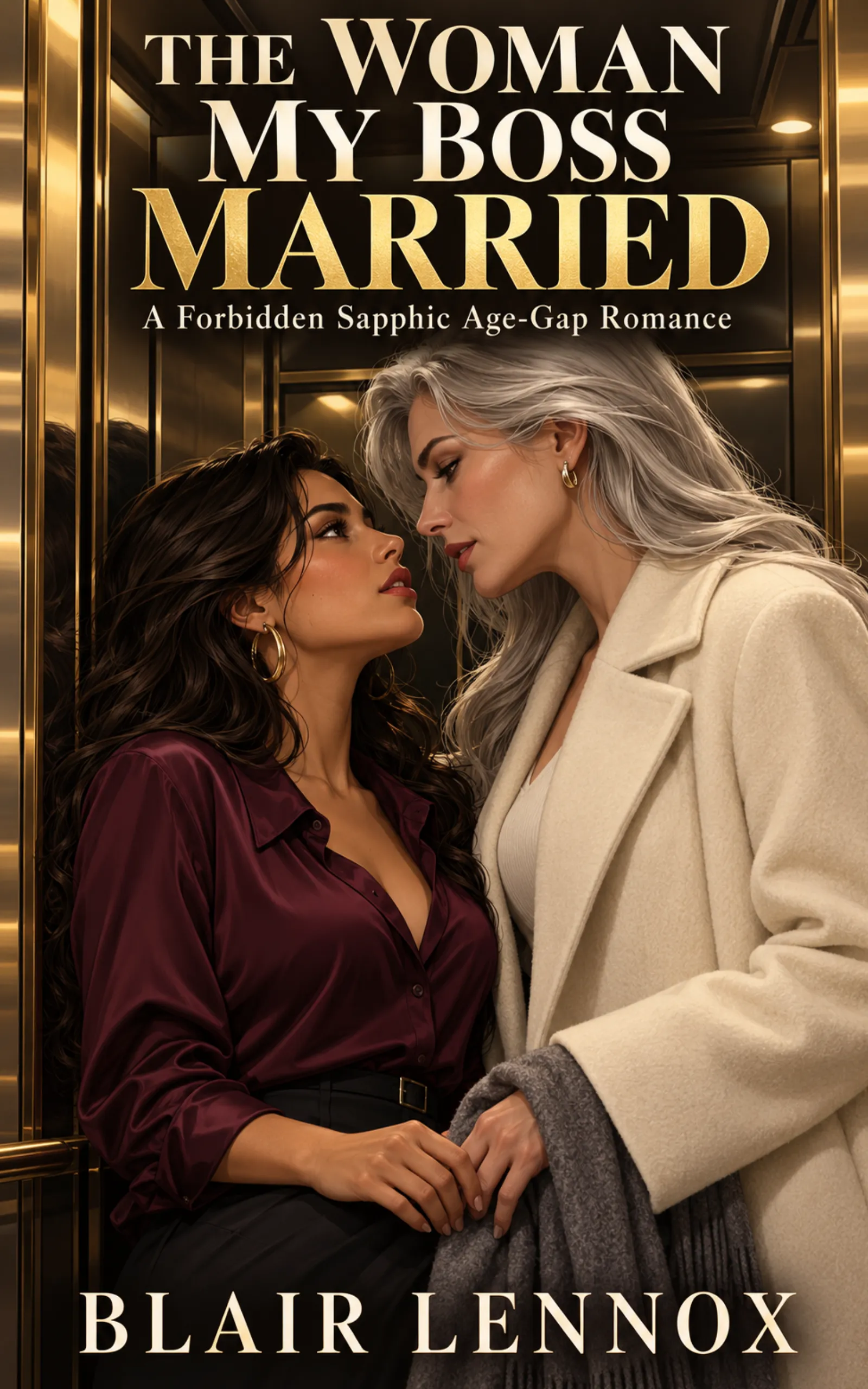
The Woman My Boss Married
The Woman My Boss Married by Blair Lennox follows Lena Ortiz, thirty-one, and Vivian Hale, fifty-two. Vivian is the newly divorced ex-wife of the man who still employs Lena. The source explicitly says the boss is not a romantic lead and that the story has no cheating.
Choose it for a later-life sapphic awakening combined with financial and workplace constraints. The title’s social connection matters, but the actual premise is more specific than a generic boss-and-employee romance.
Publisher description & reading options ↗Build a search around your mood
Start with Sapphic · FF and Age Gap. Add one theme that describes the experience you want, then apply. Treat an age gap, a first-time experience, and a workplace connection as separate choices; read the description for how they intersect.
Find sapphic age-gap romances →Common questions
Does sapphic age-gap romance always involve a late bloomer?
No. An age difference does not establish either woman’s identity or experience. Late Bloomer and Sapphic Awakening are separate publisher-supplied tags, so add them only when that part of the story interests you.
Are age-gap and older-heroine romance interchangeable?
No. A romance can feature older heroines close in age, while an age-gap story can feature one older partner. Search Older Heroines when life stage is your priority and Age Gap when the difference between partners matters.
Can I search for a specific number of years?
The finder does not currently offer a numeric age-gap range. Where the publisher provides exact ages or a gap, use the description to confirm them. Do not estimate ages from cover art.
These examples come from Fractal Enigma’s catalog and are based on publisher descriptions and tags, not full-book reviews. TropeScout is a Fractal Enigma project. Read the sample and content notes to decide whether a book is right for you.